
10 Weeks to Go, Your Practical London Marathon Training Plan for North London Runners
- help desk
- Feb 26
- 4 min read

With 10 weeks to go, your London Marathon training plan needs to shift from general fitness to specific preparation.
This is the phase where long runs get serious, race pace starts to feel real, and small mistakes can turn into frustrating setbacks. For busy runners in Muswell Hill and across North London, the challenge is not just building endurance. It is doing it without burnout, injury, or unnecessary stress.
Whether this is your first marathon or you are chasing a personal best, the final stretch of London Marathon preparation should feel structured and purposeful. In this guide, we break down how to approach the next 10 weeks, from weekly structure and pacing to fuelling, strength work, and tapering.
What Should Your 10 Week London Marathon Training Plan Focus On?
At this stage, you are not trying to “get fit.” You are sharpening what you have built.
A well-designed London Marathon training plan in the final 10 weeks should prioritise:
Gradual long run progression
Controlled marathon pace work
Aerobic consistency
Strength and durability
Structured recovery
A clear taper
The aim is simple. Arrive at the start line healthy, confident, and ready.

How Should You Structure Your Weekly Training?
There is no perfect template, but there is a sensible rhythm.
At 10 weeks out, most recreational runners should anchor their week around three key elements:
A focused quality session
A long run
Proper recovery
Here is how that can look in practice.
Monday
Recovery day.
After a long run, your body is repairing muscle fibres and replenishing glycogen stores. Either rest completely or move lightly. A 30 minute easy spin, mobility work, or a very gentle jog is enough.
The purpose is to feel better by Tuesday, not to tick a mileage box.
Tuesday
Quality session.
This could be:
3 x 10 minutes at threshold effort
5 to 6 miles slightly quicker than goal marathon pace
Hill repetitions if you train around Muswell Hill
The key is control. You should finish knowing you worked hard, but still able to run again later in the week.
This session improves efficiency and prepares you for sustained effort.
Wednesday
Strength session.
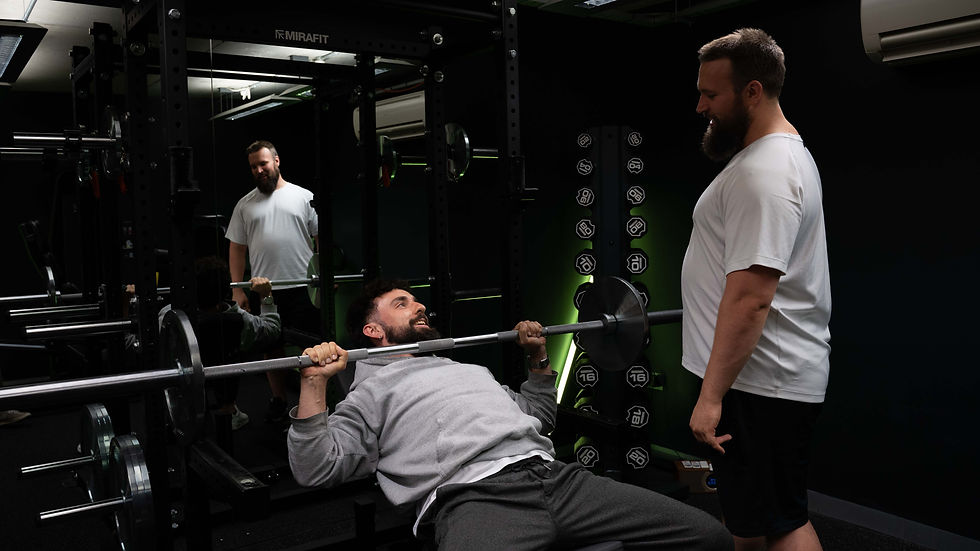
A properly structured gym session supports posture, joint stability, and resilience late in the race.
Focus on:
Single leg strength
Glute and hamstring work
Calf strength
Core stability
Keep it focused. Forty five minutes is plenty. You are supporting your running, not replacing it.
Thursday
Steady aerobic run.
This is conversational pace. It may not feel dramatic, but this is where endurance builds quietly.
Most runners underestimate how important these controlled miles are for long term progress and running injury prevention.
Friday
Flexible day.
Rest if fatigue is high.Or add a short easy run with a few relaxed strides.
This day protects your weekend long run.
Saturday
Long run.
The backbone of your London Marathon training plan.
Gradually build toward 18 to 22 miles. In the final 6 to 8 weeks, include segments at marathon pace. Practise fuelling every 30 to 40 minutes.
This is where confidence grows.
Sunday
Active recovery or complete rest.
A short easy run or light cross training can help circulation. But if you are carrying fatigue, rest fully.
Adaptation happens during recovery, not during mileage accumulation.
Why Is Strength Work Important for Marathon Runners?
Many runners focus only on mileage. That works until it does not.
Late race fatigue is often muscular, not cardiovascular. Hips drop. Posture collapses. Stride shortens.
Well programmed strength work improves:
Running economy
Joint stability
Posture in the final miles
Injury resilience
Research published in the British Journal of Sports Medicine shows that resistance training improves running efficiency and reduces overuse injury risk.
For runners tackling hills around Alexandra Palace or Hampstead Heath, strong glutes and calves are essential.
If you are unsure how to integrate this alongside your mileage, explore structured support here:

How Can You Improve Running Injury Prevention During Peak Training?
Injury risk increases as weekly mileage peaks.
Common marathon training injuries include:
IT band irritation
Achilles tightness
Shin splints
Plantar fascia strain
To improve running injury prevention:
Increase mileage gradually.
Rotate your running shoes.
Prioritise sleep.
Address small niggles early.
Avoid stacking hard sessions back to back.
If pain changes your stride or persists beyond a few days, modify training. Missing one session is better than missing four weeks.
How Should You Approach Nutrition in the Final 10 Weeks?
Fuel supports adaptation.
During London Marathon preparation, focus on:
Carbohydrate intake around long runs
Adequate protein for recovery
Hydration consistency
Practising race day gels or drinks
Do not experiment dramatically close to race day. Practise your fuelling strategy during long runs.
When Should You Start Tapering Before a Marathon?
Most runners begin tapering before a marathon two to three weeks out.
Mileage reduces by roughly 20 to 40 percent, but intensity is maintained in short segments.
The purpose of tapering is to:
Repair muscle damage
Restore glycogen stores
Reduce fatigue
Sharpen mentally
It can feel uncomfortable because training volume drops. Trust the process.
This is not the time for new shoes, new workouts, or drastic changes.
Where Should You Train in Muswell Hill and North London?
Local terrain shapes training.
Recommended routes include:
Alexandra Palace for hill strength
Parkland Walk for steady efforts
Hampstead Heath for varied terrain
Training locally builds strength and prepares you for unpredictable race conditions
Should You Work With a Coach?.
If you are managing injuries, aiming for a personal best, or struggling to structure your week, personalised support can make a significant difference.
A coach can help you:
Structure your marathon training schedule
Balance work and recovery
Integrate strength properly
Monitor fatigue
Build race confidence
At Insider PT in Muswell Hill, we work with busy North London professionals who want structure without intimidation. Our approach is supportive, practical, and tailored.
The final 10 weeks of your London Marathon training plan should feel controlled and purposeful.
Build long runs gradually. Integrate sensible strength work. Prioritise recovery. Practise fuelling. Respect the taper.
If you are training in Muswell Hill or across North London and want clarity, accountability, and expert guidance, now is the time to refine your plan.
Train smart. Arrive healthy. Run strong.


Comments